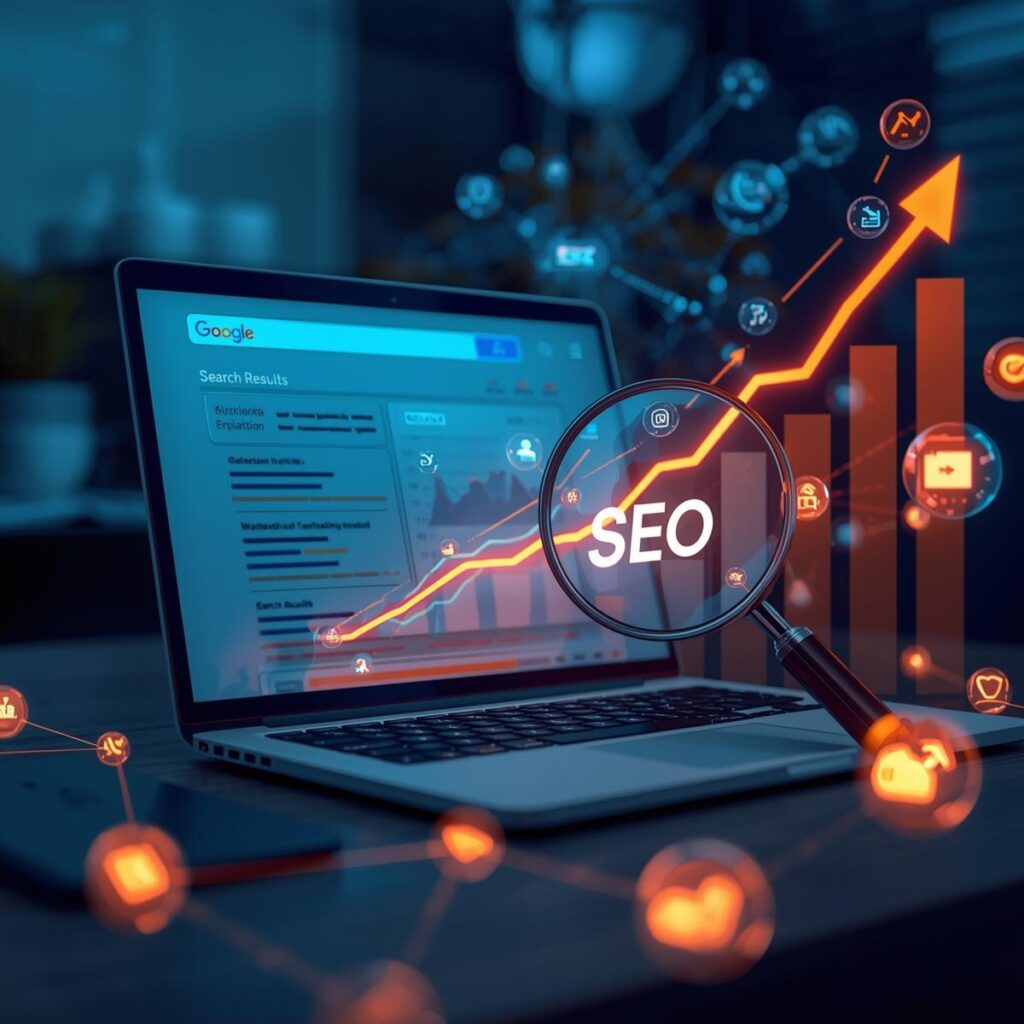
Every day, people search for information, products, and services on the internet. Most of these searches begin on search engines such as Google Search. Users usually click the first few results they see. Because of this behavior, websites must appear in visible positions in search results. Online visibility refers to how easily a website can be found by users on search engines. When a website appears near the top of search results, more people visit it. If it appears on later pages, fewer users notice it. SEO for website visibility helps websites appear in relevant search results by improving website content, structure, and signals that search engines use to understand a page. When these improvements are applied carefully, a website becomes easier for search engines to read and rank.
What Online Visibility Means for a Website
Online visibility means that people can easily find a website when they search for related information. For example, when someone searches for a topic, search engines analyze many websites and select pages that match the search query. Websites that appear on the first page usually receive most of the attention. Studies often show that users rarely move to later pages of results. Because of this pattern, higher rankings lead to more visitors.
Strong visibility also helps websites build recognition over time. When users repeatedly see a website in search results, they begin to recognize it as a useful source of information. Therefore, improving visibility through professional Search Engine Optimization services is an important goal for any website that wants to reach a larger audience.
How Search Engines Understand Websites
Search engines follow a process to discover and organize information from websites. This process includes three main steps.
Crawling
Search engines send automated programs to scan websites across the internet. These programs move from one page to another by following links.
Indexing
After collecting information, the search engine stores the content in a large database. This step allows the search engine to remember each page and its topic.
Ranking
When a user performs a search, the search engine studies its index and selects pages that match the query. These pages are then arranged in an order based on relevance and usefulness. SEO helps websites become clearer during these steps. When pages are organized properly, search engines can read and classify them more accurately.
On Page SEO and Online Visibility
On page SEO focuses on improvements made directly within the website. These changes help search engines understand the content and purpose of each page.
Important elements of on page SEO include the following:
- Page titles that clearly describe the topic
- Headings that organize information into sections
- Relevant keywords placed naturally within the content
- Internal links that connect related pages
- Clear images with descriptive text
For example, when a page contains headings and structured content, search engines can identify the main ideas more easily. This structure also helps readers move through the article without confusion. When on page SEO is applied carefully, both users and search engines can understand the page more clearly. As a result, the page may gain stronger visibility in search results.
Off Page SEO and Website Authority
Off page SEO refers to actions that occur outside the website but still influence search rankings. One of the most important elements of Off Page SEO is backlinks. Backlinks are links from other websites that point to a page. Search engines view these links as signals that the content is useful or informative. However, not all links carry the same importance. Search engines often pay attention to links from websites that already have strong credibility.
Off page SEO activities may include:
- Writing articles on other websites
- Sharing content through social platforms
- Gaining references from industry blogs
- Building relationships with other websites
These signals help search engines measure how widely a website is recognized across the internet. When a website receives meaningful references, search engines may place it higher in search results.

The Importance of Backlinks
Backlinks are links from one website that point to another website. Search engines such as Google Search study these links to understand how different pages connect across the internet. When a website receives links from other websites, it signals that the content may contain useful information. Because of this signal, search engines may give more attention to that page while ranking search results. Backlinks also help search engines discover new pages. Crawlers follow links from one page to another, which allows them to find and index website content more easily.
Key points about backlinks include:
- Backlinks help search engines explore and understand websites.
- Links from relevant websites carry stronger signals.
Technical SEO and Website Performance
Technical SEO focuses on the technical structure of a website. It ensures that search engines can crawl and understand the site without difficulty.
Technical improvements often include:
- Clear website coding structure
- Organized page URLs
- Proper sitemap files
- Secure website connection through HTTPS
- Fast page loading speed
Page speed is especially important. If a page loads slowly, visitors may leave before reading the content. Search engines observe this behavior and may lower the ranking of slow pages. Technical SEO also helps prevent errors that block search engines from accessing content. When these issues are corrected, the website becomes easier for search engines to analyze.
Page Speed and User Experience
Page speed refers to how quickly a website loads when someone opens it. When a page loads quickly, visitors can start reading the content without delay. Search engines such as Google Search also observe page speed while ranking websites in search results. If a website loads slowly, many users leave the page before exploring the information. This behavior can reduce the time visitors spend on the site. A faster website allows users to move between pages smoothly and find the information they need without waiting. Because of this reason, page speed plays an important role in both user experience and online visibility. Websites that load efficiently often keep visitors engaged for a longer time, which helps search engines understand that the content is useful for users.
Local SEO and Location Based Searches
Local SEO helps businesses appear in search results related to a specific location. Many people search for services near their city or region. For instance, someone searching for services in Lahore may see businesses located within that area. Search engines use location signals to show relevant results.
Local SEO often includes:
- Creating a business listing on Google Business Profile
- Adding accurate address and contact information
- Including location keywords within website content
- Collecting reviews from customers
These actions help search engines confirm that the business operates within a specific location. When location signals match a user’s search, the website may appear in local results.
Content Quality and Visibility
Content plays a major role in SEO. Search engines attempt to provide users with information that answers their questions clearly. When a website publishes useful and original content, it sends strong signals to search engines. Pages that explain topics clearly often attract more readers and gain more links from other websites.
High quality content usually contains:
- Clear explanations of the topic
- Organized sections with headings
- Information that answers common questions
- Original writing that avoids repetition
When users spend more time reading a page, search engines may interpret this behavior as a sign that the content is helpful.
A Logical Role of Copper Orange Media
Many businesses want stronger online visibility but face difficulty managing SEO activities. Website structure, keyword research, and content planning require careful attention. Copper orange media works with businesses that want their websites to appear more often in search results. The team studies the website structure, reviews content topics, and applies SEO methods that help search engines understand the pages. Through consistent analysis and improvement, such work helps websites gain clearer presence in search results. When visibility increases, businesses can reach users who are actively searching for related information or services.
Indicators That Show SEO Progress
Website owners can track SEO progress by observing several indicators. One indicator is search ranking. When a website begins to appear closer to the first page of search results, visibility improves. Another indicator is organic traffic, which refers to visitors who arrive through search engines rather than advertisements. User engagement also provides useful information. When visitors spend more time reading content, it shows that the page answers their search query effectively. These indicators help website owners understand whether their SEO efforts are improving visibility.
Long Term Impact of SEO
SEO functions as a gradual process. Results often appear after consistent work over time. When websites continue publishing useful content and maintain strong structure, search engines collect more signals about the site. These signals help search engines understand that the website provides meaningful information. As time passes, the website may gain higher rankings and attract a steady flow of visitors. Therefore, SEO supports long term online visibility and ongoing growth for websites.
Also Read
- Why Web Design & Development Matters for Modern Businesses
- Amazon Marketplace Services in Lahore for Business Growth
Conclusion
Website SEO helps improve online visibility by making websites easier for search engines to understand and rank. When pages follow clear structure, include meaningful content, and maintain proper technical setup, search engines can analyze them more effectively. Working with Copper Orange Media, on-page SEO organizes the content within the website, off-page SEO builds recognition through links from other websites, technical SEO ensures that search engines can access the website without obstacles, and local SEO connects businesses with users searching within specific locations. When these areas work together, a website gains stronger presence in search results, more users discover the website, and they engage with its content. In an environment where millions of pages compete for attention, SEO remains a key method for helping websites appear where users are searching.
FAQs
Q1: What is SEO for website visibility?
SEO for website visibility is the process of optimizing a website so it appears higher in search engine results, making it easier for users to find your site.
Q2: How does on-page SEO improve website visibility?
On-page SEO improves visibility by optimizing content, headings, images, and internal links, making it easier for search engines to understand and rank your pages.
Q3: What role do backlinks play in website visibility?
Backlinks from trusted websites signal that your content is valuable. They help search engines recognize your website as credible, boosting visibility in search results.
Q4: How does technical SEO affect online visibility?
Technical SEO ensures your website loads quickly, has a clear structure, and is easy for search engines to crawl. This improves ranking and overall visibility.
Q5: Can local SEO help my business reach more customers?
Yes, local SEO targets users in specific locations, helping businesses appear in local search results and attracting nearby customers to their website.